In Practice: Ombuds Dilemma #11 - Can I be a Social (Media) Butterfly?

Dear In Practice,

I have been on Facebook and LinkedIn for years. I’m new to Instagram and I’m having a great time curating my profile and feed. I appreciate how these platforms provide news, information, and easy connections - but participating in social media these days seems increasingly fraught.

Read More

In Practice: Ombuds Dilemma #12 - Whose Job Is It Anyway?

Submission deadline Extended to Sunday, February 22nd

Dear In Practice,

Read More

When Loss Matters Enough for Ombuds to Name: Introducing the Loss Recognition Threshold™

By Tracey Brant COOP, PCC
Organizational Ombuds - Dartmouth College

She had been reassigned from a committee. That was the issue, at least on paper. But fifteen minutes into our conversation, I could feel something larger moving beneath her words.

The organizational impact seemed modest - someone else would step into her role and the committee’s work would continue. Yet her voice was sharp, her sentences quick. She kept returning to the same details, circling back to moments I thought we already explored. I clarified the issue. We talked through possible responses. Still, the conversation looped.

Read More
1 Comments

Results from Well-being Survey

Thank you for participating in the brief survey on well-being that we circulated in November 2025. We appreciate your perspective! The results are shared below. To better understand the interests of our community on this topic, we will be taking additional steps to gather members’ input. First, please join an informal Community Connections group discussion on ombuds well-being on April 28 and/or April 29. Registration information for members is available here. Please contact Julie Muroff, IOA’s lead contact for this initiative, with any questions:  [email protected]

Results from November 2025 Well-being Survey 

(1) Overall, based on your definition of burnout, how would you rate your level of burnout?  Select only 1 answer from the 5 choices below:**
i. I enjoy my work. I have no symptoms of burnout.   56 ( >22%)
ii. Occasionally I am under stress, and I don’t always have as much energy as I once did, but I don’t feel burned out.   128 ( >51%)
iii. I am definitely burning out and have one or more symptoms of burnout, such as physical and emotional exhaustion.   53 (21%)
iv. The symptoms of burnout that I’m experiencing won’t go away. I think about frustration at work a lot.   7 ( <3%)
v. I feel completely burned out and often wonder if I can go on. I am at a point where I may need some changes or may need to seek some sort of help.   5 (2%)


Read More
2 Comments

Call for Peer Reviewers: Journal of the International Ombuds Association (JIOA)

The Journal of the International Ombuds Association (JIOA) is seeking to expand its database of peer reviewers. We invite experienced practitioners, scholars, and scholar-practitioners with expertise relevant to organizational ombuds practice to apply.

JIOA reviewers play a critical role in advancing the quality, rigor, and relevance of ombuds-related scholarship. Reviewers are asked to provide thoughtful, constructive, and confidential feedback to authors, supporting both scholarly integrity and the development of the field.

Prospective reviewers should be familiar with research method, professional writing, or applied scholarship relevant to ombuds work. Prior reviewing or publishing experience is welcome but not required.

Those interested in being considered for the reviewer pool are encouraged to review the JIOA Review Procedures and complete the reviewer application form at this link: https://forms.gle/Q8Q2W4LYWRDU1AEZ7.

Call for Participants: Research study on Collateral or Dual-Role Ombuds

Greetings Higher Education Colleagues,

My name is Laura Zuppo, and I am a Doctoral Candidate and Student-serving Ombuds at the University of South Florida. I am conducting a qualitative research study exploring the experiences of collateral or dual-role student-serving ombuds in higher education.

For the purposes of this study, a collateral or dual-role student ombuds is an individual who is directly employed by their institution and who serves students while also holding one or more additional roles or responsibilities on campus. Ombuds who also serve faculty, staff, and other constituents are invited to participate.

Read More
1 Comments

JIOA Special Issue Announcement: Organizational Ombuds Models: Structures, Strategies, and Implications for Practice

Organizational Ombuds offices are increasingly shaped by a range of structural and operational models that reflect shifting institutional needs, resource constraints, legal environments, and cultural contexts. From traditional in-house roles to embedded, collateral, outsourced, hybrid, regional, and shared-service approaches, the model through which organizational ombuds services are delivered carries significant implications for independence, accessibility, credibility, and ethical practice.

This special issue seeks to explore the evolving landscape of ombuds models and their impact on the theory and practice of the profession. We invite submissions that critically examine how different structural arrangements shape the work of ombuds and influence organizational trust, conflict engagement, and systems change.

We welcome manuscripts that address topics such as:

Read More

Creating Space for Transformation: Kwasun Cultural Education Society

Joe Norris of Halalt First Nation speaking about importance of the values blanket

By Nadia Ferrara, PhD,
Ombuds - Indigenous Services Canada

It is a real honor for me as Ombuds to share these truths by Indigenous Elders from British Columbia, Canada. I met with them recently and they have created these videos to share with others their lived experiences, to ensure we listen and learn from our history. I think it is so critical as space creators and space holders to engage with humility and be open to learning. These videos speak to the principles of restorative justice and most importantly, speak to creating spaces that can nurture a sense of belongingness by feeling heard.

Kwasun Cultural Education Society was founded in 2024 on the initiative of 10 Coast Salish Elders and Knowledge Keepers intent on educating anyone interested in learning about Coast Salish cultural values and ways of being. The goal of the Elders was to encourage reconciliation: to create relationships between Indigenous and non-Indigenous learners for the betterment of Canadian society. Kwasun has hosted numerous workshops because, as the Elders say, "if we are going to turn this around, we have to go back to the teachings." They have presented to BC's Legislative Assembly staff, instructors and students at post-secondary institutions including University of Victoria, Vancouver Island University, Stz'uminus Native College, Pearson United World College, the RCMP, health care organizations including Parent Support Services of British Columbia and First Nations Health Authority among others. Unlike so many Reconciliation programs, Kwasun offers teachings and cultural lessons to youth and adults alike which are grounded in the language (Hul'q'umi'num'), land and ceremony. Kwasun is rooted in the notion that "important work is never done alone". Elders work together to represent and model their cultural knowledge, enacting their lessons in ways that learners can join in the work.

Read More

Seeking Research Participants: Self Assessment of Individual Ombuds Practice and the Current Field of Ombuds Work in the United States: A Survey

My name is Misha Teixido. I am a graduate student studying conflict resolution at the Heller School for Social Policy and Management of Brandeis University. In the final year of my master’s program, I am currently working on my master’s capstone, which is about ombuds attitudes toward field practices and impressions in the United States.

Those who engage with the field of ombuds work, whether as aspiring ombuds or with the intent to hire a conflict resolution expert, seek clarity for the expectations of the role they look to fill, such as understanding specialization or conduct to follow. The need for such clarity is a situation that, while initially presented as surface level—many professions have specializations within their respective fields—is more ambiguous in the ombuds world. The position of an official advocate for complaints and conflicts has existed for thousands of years, each holding a variety of responsibilities in numerous contexts, some of which are more formal than others. Many of these positions use the term ombuds, ombudsperson, or ombudsman to describe their role, fairly satisfying the etymology of the word that roughly translates to “representative” from Swedish. It must be noted, however, that each implementation of ombuds varies greatly, as the position fluctuates in scope and responsibility from organization to organization, government to government, and country to country, culminating in the diverse application of ombuds practices that most who work in the field of ombuds work are familiar with (e.g. advocate ombuds, classical, organizational, etc.).

With a position that contextually varies as much as an ombuds, it is critical to engage with the field to ensure that the understanding of the role progresses both internally and externally in a relatively uniform manner. The purpose of this research is to understand how ombuds assess their own personal practices as well as how they view the practices of the ombuds field in the United States as a whole, so as to better understand how the field of ombuds work is perceived internally in the United States. Questions about how the ombuds office one works is modeled and functions, as well as inquiries into how ombuds became introduced to the field of ombuds work are at the core of understanding current perceptions and practices of ombuds work in the United States. Scholarship reporting the history of the ombuds role, discerning types of ombuds offices and models from one another, and exploring implementation of ombuds design exists, but limited research has been done that analyzes the current view of ombuds practices in the United States as understood by ombuds themselves (Tompkins Byer 2017). The core benefit of this research is that it provides an opportunity for practicing ombuds to share their understanding of ombuds work in the American context. The information shared in this survey may provide benefits to public understanding of ombuds nationwide, and may contribute to the continued evolution and evaluation of ombuds work in the United States. Responses may lead to improved efficacy of ombuds offices, as well as overall strengthening of ombuds office functions. Additionally, information shared may contribute to making the ombuds field more accessible, both for aspiring ombuds as well as for organizations considering the implementation or use of an ombuds service. An aspiring ombuds myself, hearing from ombudspersons in the field will provide me with a stronger understanding of how the role of the ombuds varies in numerous contexts.

Read More

The Evolving AI Reality and Confidentiality in the Ombuds Practice

by Reese R(ai)mos
Director - University Ombuds Office, Virginia Tech

To understand where we’re heading, it helps to look back. Two decades ago, I read Ray Kurzweil’s The Singularity Is Near, where he predicted an exponential rise in technology that would culminate in artificial and human intelligence merging around 2045. Some called him unrealistic; others, like Bill Gates, praised his foresight. Whether you see him as a visionary or a dreamer, there’s no denying that AI is rapidly reshaping our world, and, for Ombuds, our profession.

Rather than debate the timing of the “singularity,” it’s more pressing to examine what AI is already doing to our practice. Across fields, technology is transforming how information is created, managed, and used. In July 2025, for example, a robot trained solely on surgical videos autonomously performed a major phase of a gallbladder removal at Johns Hopkins. That’s no longer science fiction, it’s our present.

Read More
1 Comments

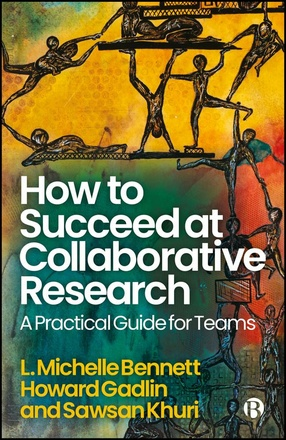
Book Spotlight for Ombuds: How to Succeed at Collaborative Research, A Practical Guide for Teams by L. Michelle Bennett, Howard Gadlin, and Sawsan Khuri (2025)

As Ombuds, we often find ourselves supporting individuals and groups working in high-stakes, cross-functional, and/or interdisciplinary environments. These spaces can offer tremendous opportunities for innovation. These environments also frequently bring the interpersonal and structural challenges that lead people to our doors. Researchers, in particular, often work within complex collaborations that span departments, institutions, cultures, and differing funding expectations. When roles, expectations, or communication norms are unclear, relational strain can quickly appear. Today's complex research challenges demand effective teams, yet researchers rarely receive training in teamwork skills crucial for collaborative success. How to Succeed at Collaborative Research: A Practical Guide for Teams (L. Michelle Bennett, Howard Gadlin, and Sawsan Khuri (2025)) is a resource for us as Ombuds to help us understand and support those researchers that may come to our office.

Specifically, this book provides guidance that may help us support researchers with tools to build and sustain effective teams. Drawing on organizational psychology, team science and the authors’ own experience, it offers concrete practices for fostering collaborative innovation, managing diverse perspectives and achieving high-impact outcomes. The book is intended for researchers, administrators and facilitators seeking to build high-performing teams. with a special focus on enabling researchers to work effectively across different disciplines, organizations, and sectors to meet the evolving demands of complex research projects.


This book spotlight is an effort of the Independent Voice to bring relevant resources to your attention. If you have resources that you feel our Ombuds colleagues will benefit from knowing, please send a message to [email protected] and we will look to share via this channel.

In Practice: Ombuds Dilemma #10 - CC and BCC: Why Me as an Addressee?

Dear In Practice,

I’m confused about what to do when visitors copy or blind copy me on emails without warning or explanation. I respect visitor self-determination, and I typically avoid intervening absent an explicit agreement with the visitor about why and how I would do so.

Read More
1 Comments

A Message from Europe: Reflections on Our Recent Gathering of the European Ombuds and Mediator (EOM) Group

By Tuba Bilecik
EOM Group Co-chair

The European Ombuds and Mediator (EOM) Group recently held its annual in-
person meeting in Copenhagen hosted by our colleagues from Maersk Ombuds
Office. As always, it was a real pleasure to reconnect with colleagues, both familiar
and new. After months of connecting virtually, there is something uniquely energizing
about being in the same room, sharing ideas and remembering the sense of
community that fuels our work.

There is a growing momentum in the ombuds field across Europe. In just the past
couple of years, we have seen more and more organizations explore how ombuds
programs can strengthen healthier, more inclusive workplaces. Notably, several
institutions including the European Central Bank, European Investment Bank and
European Space Agency have launched their first ombuds offices. At the same time,
professionals from diverse disciplines are becoming increasingly curious about the
ombuds role and what it offers as a career path.


Read More
2 Comments

Looking for Facilitators/Instructors for 2 Joint Sessions April 15

The IOA is teaming up with the ABA Section of Dispute Resolution to produce two applied learning tracks that will take place on Wednesday, 15 April 2026, from 1:00 to 4:00 PM ET. These sessions will close out IOA’s Annual Conference and launch the ABA Section of Dispute Resolution’s Spring Conference.  

Led by IOA President Jenn Mahony and ABA Section of Dispute Resolution Chair Liz Hill, this virtual event brings together experienced professionals from across the dispute resolution landscape.  

IOA is looking for members who have specific skills in the following areas to co-facilitate these sessions. We will select two facilitators/instructors - one for each track to work with the facilitator/instructor selected by the ABA Section of Dispute Resolution. For those interested, please email [email protected] by Wednesday, 12 November. Please attach your CV/resume and detail your experience training in either area. Details about these sessions are below.  

Read More

Reflections from the Asia Pacific Regional Advancement Committee Conference

Update from the Asia Pacific Regional Advancement Committee (RAC) Conference:‘The Ombuds Role in a Complex, Challenging and Rapidly Changing World’. Ōtautahi Christchurch, New Zealand. October 8-10

by Fred Wright, Chair of the International Outreach Committee and Former AP RAC Co-Chair 


Read More

Our Hearts are with our US Federal and NGO Colleagues

Message from IOA President Jenn Mahony 

Our hearts continue to be with our US federal ombuds colleagues at this time of tremendous uncertainty as we enter the fourth week of the US government shutdown. We hope that an effective and positive end is in sight.

We recognize too that our UN and other NGO ombuds colleagues are navigating uncertainty as their agencies grapple with the impact of decreased  US aid. We hope that certainty is on the horizon.

Read More

October 2024 Certification Update

As you know, we have recently launched two new certification designations — one for individuals and one for programs (offices). These initiatives are the culmination of years of discussion, strategic planning, and hard work. They allow us to recognize individual skills and knowledge, regardless of workplace, and to certify organizations that demonstrate properly structured programs aligned with IOA Standards of Practice.

Our next step is to explore more advanced and specialized levels of certification. This may include partnerships with other ombuds associations interested in offering certifications tailored to their communities. The United States Ombuds Association (USOA), for example, is currently exploring certification for its members, and given IOA’s established certification infrastructure, we are a natural potential partner. As with IOA’s existing certifications, any specialized designations would follow the same rigorous process for examination development, rubric creation, and needs assessment — all within the framework of the IOA Certification Program.

Certification not only affirms professional and program excellence — it also raises the visibility and credibility of our collective skills, value, and impact. It is truly a tide that floats all boats, strengthening the recognition of ombuds work across sectors and regions.

Later this month, I will be traveling to Colorado to attend the USOA Annual Conference (October 22–24), where President Jordan Stephan will host an information session to gather feedback from their members about needs and interests. Should this exploration evolve into a formal partnership approved by IOA, we will share updates with the community.
2 Comments

Happy Ombuds Day

Happy Ombuds Day!  

I’ve spent the past few days attending IOA’s Asia Pacific RAC Conference (remotely) where I had the opportunity to hear a keynote from former New Zealand Ombudsman Peter Boshier.

It was fascinating to learn about the tremendous impact he had during his decade of service. At first glance, that might seem expected—after all, he was the national ombudsman with the backing of Parliament. But when he stepped into the role, he shared that the office was seen as ineffective—a place where issues went to die according to some comical YouTube videos. But through commitment to true neutrality, stronger transparency of process, reframing the work as problem-solving, and thoughtful recommendations, he demonstrated the value of the role and reshaped public perception. The results? Utilization of the office doubled.

Read More

Celebrating Voices, Building Equity: International Ombuds Day 2025

 A message from our Diversity, Equity, Inclusion, Accessibility, and Belonging (DEIAB) committee

On October 9, 2025, we join Ombuds professionals globally to honor Ombuds Day, under the theme “Ombuds: Empowering Voices, Resolving Challenges.” This year, we especially recognize the powerful intersection between the Ombuds role and our shared commitment to Diversity, Equity, Inclusion, Accessibility and Belonging (DEIAB).

Ombuds serve as trusted, confidential and impartial partners within organizations, amplifying voices that may otherwise go unheard and easing tensions with respectful, equitable solutions.

Read More

Pride in Practice - National Coming Out Day

October 11th is National Coming Out Day. This day is set aside for folks identifying as LGBTQIA+ to publicly share their internal identity. It celebrates the right to live authentically and without fear. It’s a reminder that identity, across race, culture, gender and orientation, should never be a barrier to belonging. Coming out, or inviting someone in, is a personal and courageous act of reclaiming that right.

This message aligns deeply with Ombuds work. We are proactive allies for everyone. We don’t wait for crises to erupt or tensions to build. We offer a safe, confidential and judgment-free space to explore difficult emotions, share experiences and seek support.

Guided by our principles of independence, impartiality, informality and confidentiality, we as Ombuds practitioners help individuals speak their truth and navigate challenges with dignity and care.

Read More